

The history of us humans is consisted of chains of events ‘emplotted’ by powers at any given point of time and our history is generally accepted to be a male-written history and power has been in the hands of political and social phallocentrism and patriarchy.
Over the course of enlightening ventures this kind of generic power became challenged to force its distribution among others who were excluded such as women, and people of color. The distribution of power paved the way to bring a vast spectrum of voices onto the stage.
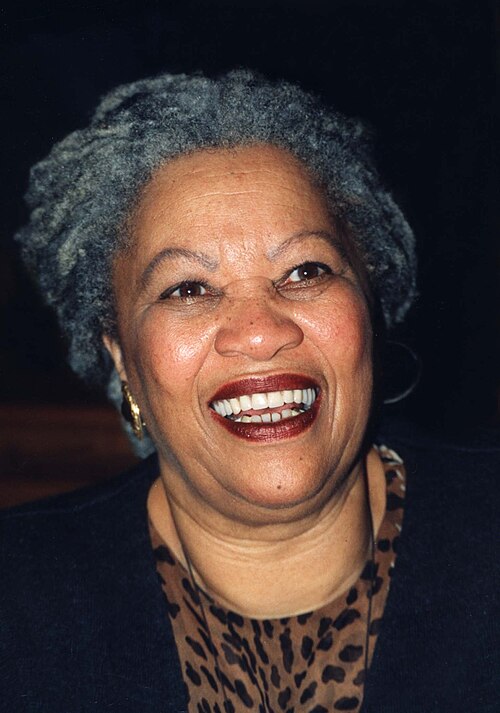
Toni Morrison is both a woman and one of color. The works of Toni Morrison have a special intrinsic value when considered from a temporally experiential point of view. They appear to the modern readership as a narrative of times in which people tell their own narration of whatever they remember from times before. Morrison draws the attention to the fact that what is remembered does not happen once, rather, the memories come back again and again and it is through these re-occurrences only that a historical time can be reconstructed
Along the scenes in the plot, we come to familiarize ourselves with the concept of ‘re-memory’, a powerful concept which, I argue, can be used by critics and scholars to reinforce the need to travel back and forth in time again and again in our analyses, each time bringing new insights into the reality of a past time.
The contention that I am trying to put forward in this paper is interesting to me, before all, because of a global polyvocal adherence to keep the modern time’s waters calm and ‘democratic’ within the genre of Slavery and Racism. Writing about the super-topics of racism and enslavement has only been able to touch the sub-topics with strange cautions; a kind of caution which contributed to a full-scale conservativism within the debates related to the super-topics.
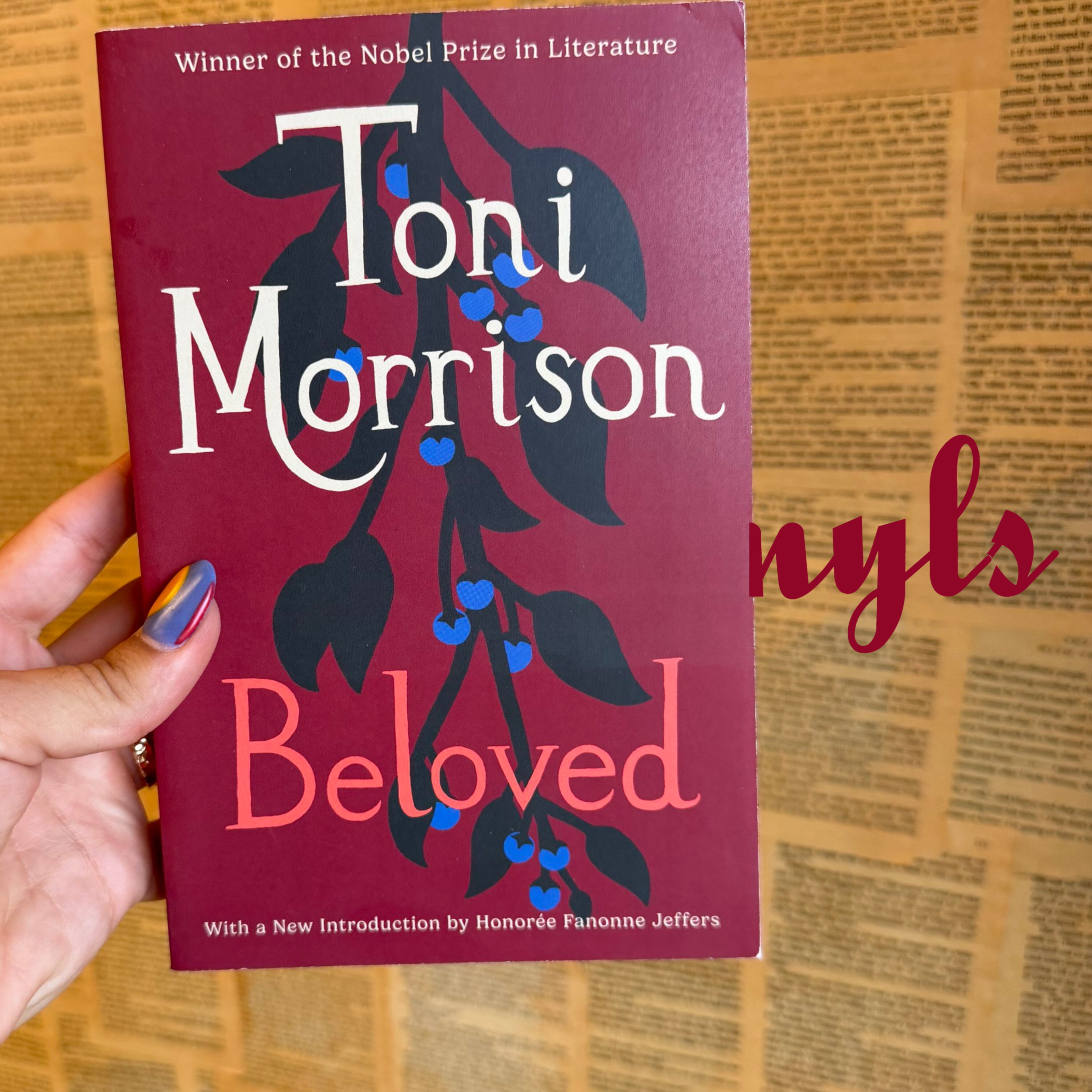
Beloved is a story of hatred, a story of ‘learned helplessness’, a story of copings with the uncontrollable, a tale of surfacing and an attempt to dislocate the definition of power embedded in the notion of white supremacy. Beloved is the warm silent breeze blowing past an island ablaze. No words can be said.
Not even words are enough. The novel, for me, is not at all about the enslaved black African-Americans. Rather the lack people are instrumentalized to show the dark side of the ‘White Civilized’. It is a crucial mistake, I emphasize, to look at slavery narratives as stories of black people. By Beloved we have everything the modernity has fought for: freedom of speech for people of color and for women and a history told by a female author. Yet we see how much is left out can cannot be ‘contained’. Even while Morrison herself, in Playing in the Dark, spoke of how “writers pull the narrative up short with a phrase such as let us draw a veil over these proceedings too terrible to relate” (King, 2000), she seems unable to do justice to a fictional portrayal of the incidents. She could have dealt with the horrors more explicitly to leave no room for ‘whitewashed’ interpretations. I believe, she, who has fought for filling ‘a void of historical discourse’ and for giving voice to ‘a silence of four hundred years’, had the full right to be more direct than ever in her recuperation of the historical pain. But why could she not do proceed in a more direct way in talking of how black people were treated like animals.
My answer would be, due to an overarching conservative discourse in the genre from both sides of black and white people. Even Toni Morrison wants to remember partly. Talking of ‘mouth bit’, ‘slave bridles’, ‘milking’ and ‘raping’ and ‘chain gangs’ and ‘sawing babies’ and ‘callings by A B C D and 000000’ and ‘middle passages’ and ‘hearts of darkness’ is never enough. There must be the courage to say the ‘name’, however horrible and disconcerting it is, to reconstruct the white look on the black people as animals not only at those points in our history. The modern humanity needs beloved to stay around, to not be expelled in order to remind us of how an action done can end but will not perish. It will remain to haunt and demand. Since the middle of the 19. Century, as the national and global atmospheres increasingly drew themselves towards opening orifices of freedom for hearing the voices of the oppressed, it is seen that from one side there is a general tendency to keep possibly quiet about slavery out of a shameful history and from the other side, a general tendency not to portray the emotional pain of being seen a human and being treated like animals but ridiculously to ‘teach’ about these emotional sufferings in indirect allusions. From this unsaid struggle, a new conservative discourse has set foot within the literary production and literary criticism.
In 1988 Morrison refers pointedly to this conservative posture of the white people but NOT of the black people: ‘in order to “construct and maintain ‘slavery’ as a system, white people have had to reconstruct everything in order to make that system appear true”, a process which continued after abolition to maintain supremacy’ (King, 2000). Talking about slavery is not, and must not be, at all a talk about scapegoating the white people in their shining history of advance and development, it is a sheer talk of making the white civilized responsible, a responsibility that is shirked and is only allowed and accepted in words with no room for amends or compensation. On Monday December 19. 2022, a couple of weeks ago, Dutch Prime Minister Mark Rutte, finally arranged to apologize in ceremonial wordings for Netherlands’ historical role in slavery and slave trade. As if words were a way out. Here is an account of the Dutch apology:
"Today I apologize," Rutte said in a 20-minute speech that was greeted with silence by an invited audience at the National Archive
Ahead of the speech, Waldo Koendjbiharie, a retiree who was born in Suriname but lived for years in the Netherlands, said an apology was not enough. "It's about money. Apologies are words and with those words you can't buy anything," he said.
Rutte told reporters after the speech that the government is not offering compensation to "people — grandchildren or great grandchildren of enslaved people." … Describing how more than 600,000 African men, women and children were shipped, "like cattle" mostly to the former colony of Suriname, by Dutch slave traders, Rutte said that history often is "ugly, painful, and even downright shameful." (NPR.org, 2022)
Even today, after ‘a silence of 400 years’, the conservativeness roams and offers space only for words. Interestingly the novel is not told in the first person but it seems Morrison was content to force Beloved out of the house 124 as she was ‘the first person deciding’. It is wrong to expel Beloved out and live with her absence as if all the problem is solved. To conclude I would say only confronting the ‘void’ in its materiality can lead to the proper humanistic “be and it is” in all discourses of human sufferings. The surface never leads us to the core, but we live on the surface and it’s thus more crucial a matter. Life precedes the analysis of the core.